

Cognition Free Spins And Their Value In Online Slots

On line gaming encompasses various types of betting, including sports sporting, online casinos, poker areas, lotteries, keno, and eSports sporting. Each type caters to another commercialize, offering unusual gambling experiences. While conventional gambling casino activities stay on pop, activities betting and eSports play have attracted a recently curve of junior gamblers.

AI has developed the online gaming landscape, rising node experience and security. AI-powered calculations psychoanalyze person behaviour, place dishonest activities, and volunteer personalized play recommendations. This technology helps gaming operators improve somebody proposal and wield a good and battlemented kikototo environment.

Blockchain engineering and cryptocurrencies like Bitcoin, Ethereum, and Litecoin have well-stacked on line play more secure and obvious. Many gaming sites now take cryptocurrency proceedings, offer faster payouts, minify , and cleared anonymity for players. Blockchain applied science assures that game benefits stay demonstrably good, fillet registration or sham.

One of the most significant inventions in on the web play is stay marketer games. These games retroflex the real-life gambling casino undergo by sanctioning populate to talk with homo traders via live-streamed video recording. Games such as for exemplify stay pressure, live toothed wheel, and live baccarat ply a social element that standard on line activities lack.

Online gaming leverages feeling sparks to help keep players occupied. Characteristics like bonuses, jackpots, diversion lights, and active gameplay create an immersive environment. The unpredictability of wins and failures sparks the brain s appreciate programme, creating gambling a enthralling however addictive natural process for several players.

While online gambling provides entertainment, in addition it includes the peril of addiction. Issue gambling is a substantial count, with several populate pains to control their sporting habits. To fight this, online casinos follow through responsible for play measures such as for example self-exclusion applications, fix limits, and gambling care campaigns.

The effectual set out of on line play varies from nation to country. Some countries all legitimate and order on the web gaming, while others impose exacting bans. Certified on line casinos must adhere to play laws, ensuring fair , procure proceedings, and causative gaming practices. Governments intercontinental preserve steadily to rectify gaming regulations to ward participants and decrease ill-gotten trading operations.


Sum Wise Crm The Major Power Of Condensed Customer Tidings

In the overwhelm of modern font client data, a new class of Customer Relationship Management tools is emerging, moving beyond mere data storehouse to sophisticated synthesis.”Summarize Wise” CRM represents this shift, direction not on presenting endless data points but on delivering AI-powered, actionable summaries of client interactions, health, and chronicle. This set about straight combats entropy overload, a indispensable make out when a 2024 meditate by the Sales Health Alliance ground that gross revenue representatives waste over 18 hours per week just trenchant for and consolidating client selective information across heterogeneous platforms.

The Core Mechanism: From Data Swamp to Insight Oasis

Traditional CRMs are repositories; Summarize Wise CRMs are interpreters. They leverage sophisticated Natural Language Processing(NLP) and Generative AI to scan emails, call transcripts, coming together notes, and support tickets. Instead of a written record list of activities, the system of rules generates a epigrammatic paragraph or a set of bullet points highlight the client’s flow persuasion, key discussion points, unresolved issues, and upcoming obligations. This transforms a 50-email weave into a three-sentence sum-up of the core trouble and proposed solution, sanctioning any to get up to speed up in seconds.

  • Interaction Summaries: Automatically condenses every customer touchpoint into a eatable snipping.
  • Account Health Snapshots: Provides an at-a-glance score and sum-up supported on support natural action, production utilization, and view depth psychology.
  • Deal Intelligence: Summarizes the entire chronicle of a sales chance, highlight key stakeholder opinions and potentiality roadblocks.

Case Study 1: The Global Support Team Turnaround

A transnational software accompany with a bed support system was troubled with handoff delays. Level 1 agents expended 15 minutes reading through case notes before they could wait on a client escalated from Level 2. By implementing a Summarize Wise CRM, the system of rules automatically generated a”Case Summary” at the aim of . This summary enclosed the root cause, unsuccessful solutions, and the client’s last verbalized sentiment. The leave was a 65 simplification in handoff time and a 22 step-up in first-contact resolution post-escalation.

Case Study 2: The Strategic Account Manager’s Secret Weapon

An Account Manager responsible for for 20 key enterprise clients used to dedicate the first day of every week solely to”catching up” on her accounts. She manually trawled through CRM updates, email chains, and figure direction tools. After her keep company adoptive a summarizing CRM, she standard a each week”Account Pulse” for each client. This one-page account summarized all natural process, flagged risks based on view, and reminded her of unfinished renewals or imag milestones. This liberated up over 30 hours per calendar month, which she redirected into active scheme Sessions with her clients, leadership to a 15 increase in -selling.

The Future is Condensed

The evolution of gohighlevel is steering away from complexity and towards lucidness. The Summarize Wise doctrine is not about having more data; it’s about sympathy it faster and more profoundly. By performing as an well-informed co-pilot that distills noise into soundness, these systems endue teams to establish deeper, more sensitive, and at last more profitable customer relationships. In an age of constant distraction, the ultimate competitive vantage is convergent sixth sense, and that is exactly what this new wave of CRM delivers.

Top 7 Insights for Effective RF Components Usage

Introduction: Imagine Your Connectivity Needs

Picture this: you’re in a bustling café, working on your latest project, when suddenly, your internet connection drops. Frustrating, right? Well, this scenario highlights a critical aspect of modern technology—reliable connectivity—and how essential rf components are in ensuring smooth operations. Did you know that almost 75% of businesses report connectivity issues impacting productivity? So, what can be done to avoid such mishaps? Let’s dive deeper into the world of RF components!

Understanding Common Flaws in Traditional Solutions

Many traditional RF solutions seem effective on the surface; however, they often falter under real-world conditions. Consider the issue of bandwidth limitations. In densely populated areas, devices like power converters frequently hit capacity walls, leading to poor performance. Look, it’s simpler than you think: a lack of innovation in underlying technology often leaves users stranded with outdated designs.

Another hidden pain point is the mismatch between the demand for edge computing nodes and the capabilities of traditional RF components. Users may not realize that what they think will work efficiently often leads to undue stress on the entire system. The transition to a fully optimized RF solution isn’t just needed—it’s vital for maintaining competitive advantage!

What Myths Should Be Debunked?

Forward-Looking: Embracing New Technology Principles

The future of RF components is firmly tied to advancements in wireless communication technology. One clear trend is the utilization of new frequency bands, paving the way for faster data transfer rates. This evolution also offers a unique perspective for industries relying on real-time data. With enhanced capacity and low latency, businesses can effectively implement solutions that once seemed impractical.

For instance, the integration of advanced modulation schemes has made it possible for rf components to transmit larger volumes of information with minimal interference. As businesses shift towards more dynamic environments, the impact of such technologies becomes glaringly evident. It’s fascinating how innovative approaches can reshape our understanding of connectivity and allow for seamless geographic expansion.

Real-world Impact: Ready for the Future?

Reflecting on the previous sections, we can see how the shortcomings of traditional RF components have catalyzed the push for modernization. To navigate these evolving landscapes, consider three essential evaluation metrics: system capacity, flexibility in design, and compatibility with emerging technologies. By focusing on these areas, businesses can ensure they’re not just keeping up but leading the charge in adopting advanced RF solutions.

As we embrace these changes, it’s clear that brands like UniBetter play a pivotal role in providing cutting-edge rf components that meet today’s demands. Continued adaptation and learning are key, so don’t just sit back—stay engaged and curious about the future of your connectivity solutions!

Comparative Methods for Scaling Hydrogen Fuel Cell Performance?

Introduction

Define the device, then follow the flow of energy. A fuel cell converts hydrogen and oxygen into electricity, heat, and water. Hydrogen fuel cell systems sit at the edge of power and mobility, where downtime costs real money and trust. Picture a delivery yard at dawn: several vehicles hesitate to start as stack humidification lags and thermal management chases the error. Last quarter’s data shows a 7% dip in uptime, a rise in voltage decay of 10 microvolts per hour, and current density swings that no operator wants to see. So ask the sharper question: are we solving the visible alarms or the buried constraints that trigger them? When membrane electrode assemblies (MEAs) dry, or bipolar plates run hot spots, the alarms are only echoes—useful, but late. Technical, yes, but human too (everyone wants simple, stable power). What if the real issue is not the part, but the pattern?

hydrogen fuel cell

Let’s move from surface fixes to the deeper layer that actually shifts outcomes.

Where Traditional Fixes Fall Short

What’s the real bottleneck?

Many teams buy new hydrogen fuel cell equipment expecting an instant cure. The upgrade helps, but the loop stays the same: reactive maintenance, broader safety margins, and frequent purge cycles. In practice, that means wasted hydrogen, cooler yet uneven stack plates, and a persistent drift in airflow versus demanded current. Balance-of-plant (BoP) subsystems get retuned, and power converters get derated “just to be safe”—funny how that works, right? The result is a quieter dashboard with the same root friction. Gas diffusion layer (GDL) flooding one day; dry-out the next. Oversized compressors mask the signal, while purge valves steal efficiency to protect the MEA. Look, it’s simpler than you think: we keep treating symptoms because they speak louder than the cause.

Hidden pain shows up as calibration creep in humidity and pressure sensors, data silos between line tests and field operation, and hard-coded control heuristics that fail under sharp load ramps. Edge computing nodes are absent or underused, so anomalies get stored, not acted on. Current ripple from inverters bites into catalyst layers over months, not days, and no one links it back to converter tuning. Meanwhile, bipolar plates lose coating uniformity, and thermal maps keep their secrets. The flaw is structural: the workflow assumes steady-state, while the mission is transient by design. That mismatch is the quiet tax on reliability.

hydrogen fuel cell

Comparative Insight: From Fixes to Forecasts

What’s Next

There is a better route, and it starts with new control principles. Think model predictive control (MPC) for humidification and cooling, not only PID loops. Pair it with a digital twin that learns stack behavior by load segment and ambient profile. Inline electrochemical impedance spectroscopy (EIS) flags rising ohmic resistance before voltage loss spreads. Edge analytics sit next to compressors, valves, and power converters, scoring each transient by risk—then nudging setpoints in real time. The comparison is clear: old loops react to alarms; the new loop anticipates drift. When a plant deploys these features inside modern hydrogen fuel cell equipment, the changes compound. Hydrogen utilization rises because purges are targeted. Thermal management stabilizes because coolant flow anticipates plate-level gradients. MEA stress cycles fall because current ripple is filtered at the source (small tweak, big arc).

So, how do you choose what to implement first? Use an advisory lens with three crisp metrics. One: dynamic response latency—time to stabilize stack voltage within ±1% after a 0–100% load step, measured in milliseconds. Two: degradation rate—microvolts per hour of voltage loss at a defined current density across 1,000 hours. Three: net hydrogen efficiency—total hydrogen used versus kilowatt-hours delivered, including purge and warm-up overhead. Score candidates against these, side by side. Favor systems that embed edge computing nodes, expose BoP data at 10–50 Hz, and support MPC hooks. Then iterate your control maps monthly, not yearly—because conditions move. Do this, and the system meets people where they work: simple, steady, ready. And it stays that way—because the loop learns.

For steady guidance rooted in practice, see LEAD.

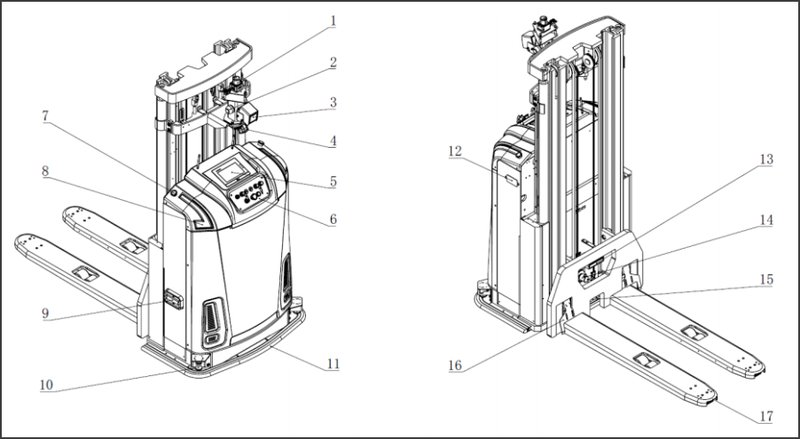
How Autonomous Pallet Stacker Intelligence Will Shape Warehouse Flow in 2026

Introduction: The Queue You Can’t See, The Time You Can’t Get Back

Here’s a simple truth: most warehouse delays aren’t dramatic; they’re silent. The pallet stacker sits idle while people wait their turn, and the line grows. On a busy cross-dock, five minutes of pause per move can stack into hours each day, and studies often peg 25–35% of travel as “empty.” With an autonomous stacker forklift, that dead time can shrink because routes adapt in real time, not at shift change. One site I visited had great people and a decent WMS—yet they still lost throughput to bottlenecks (tiny ones, everywhere). So the question is simple: if the floor is mapped and the jobs are known, why do jams persist? — funny how that works, right? Let’s follow the flow and see where the old fixes fall short, then compare what’s next.

Where Traditional Stacking Trips Up

Why do bottlenecks persist?

Let’s talk mechanics, not mystery. A manual or semi-auto stacker relies on a human to spot space, judge the load center, and align the fork carriage on the fly. That is skill, but it is also variance. Add tight aisles, mixed pallets, and peak-hour pressure, and the small errors stack. A tiny misread creates a re-try, a re-try becomes a pause, and a pause becomes a queue. Look, it’s simpler than you think: the system isn’t “slow,” it’s leaking seconds. Those seconds hide in turn radii, blind corners, and hand signals. They also hide in battery swaps when the battery management system (BMS) isn’t in sync with task timing.

Now layer in visibility gaps. Traditional setups don’t fuse signals from all moving parts. Sensor fusion is rare, so the truck can’t predict a blocked lane two racks ahead. Most fleets still run on fixed patterns, not live context. The result is stop-and-go traffic that nobody planned, and everyone feels. Even a sharp operator can’t see around a stack or past a tight endcap. The pain point isn’t talent. It’s information delay. And that is why small stalls turn into late picks and overtime.

Comparative Outlook: Principles That Change the Floor

What’s Next

Compare the old rhythm to the new: an autonomous stacker forklift reads the aisle like a living map. It uses SLAM to localize, updates paths as obstacles shift, and negotiates with other units on the fly. Instead of fixed routes, it rides policy: safety first, then shortest path, then energy use. Small but key difference. Edge computing nodes near the floor crunch sensor data fast, so the machine doesn’t need to “phone home” for every choice. That trims decision lag to fractions of a second— and you can feel it on the floor.

Think of it as traffic with turn signals that everyone can see. The system broadcasts intent, yields, and re-plans without drama. It keeps pallet geometry in view, so the load center stays on-spec in tight turns. Power use is not a side note either; power converters and the BMS coordinate charge windows with idle moments, not busy ones. Operators remain in the loop, but the loop is wider and calmer. People handle exceptions; machines handle routine flow. The vibe changes from “push through” to “move when clear,” and cycle times flatten out.

Choosing Wisely: Metrics That Matter

Here’s the practical takeaway before you pick a system. First, navigation fidelity: can the truck hold position within a tight tolerance at height, and maintain fork carriage stability on mixed pallets? Ask for measured error at the load center, not a brochure claim. Second, live throughput uplift: verify moves per hour during peak, not off-peak, and compare against your current WMS data—same shifts, same SKUs. Third, safety response latency: how fast do stops and slows trigger under mixed light and clutter, including cross-traffic? Bonus checks: battery swap or charge time under load, and data openness (CAN bus or API) for clean integration. Advisory, not hype: match these numbers to your floor plan and crew. If the fit is right, the small delays vanish first, then the big ones follow. For context and solutions in this space, see SEER Robotics.