LusaView IPTV – Exploring Entertainment Options for International Households

International households often have diverse television preferences. Family members may speak different languages, follow news from different countries, or enjoy entertainment connected to their cultural backgrounds. Access to international television can help people stay connected with familiar programming while also exploring content from other regions. LusaView IPTV is promoted as an entertainment option for viewers in the USA, Canada, and UK.

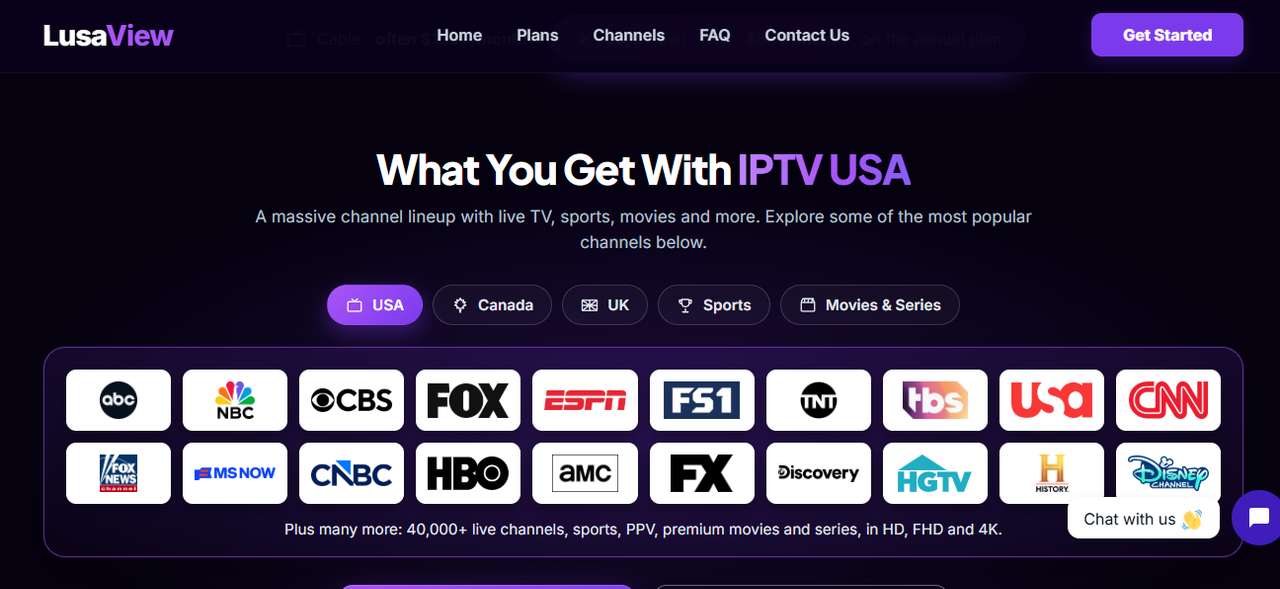
The platform advertises more than 40,000 live television channels, presenting a broad selection of programming for different audiences. Viewers may investigate international news, this website , documentaries, lifestyle programs, and other television categories. For multicultural households, this variety may be useful when family members prefer different types of content.

Television can also help people maintain connections with their home countries. Individuals living abroad sometimes enjoy watching familiar programs, following regional news, and exploring entertainment in their preferred languages. Before subscribing, customers should review the channel list and confirm whether the languages and countries they are interested in are actually supported.

Sports provide another important entertainment category. LusaView promotes major sports coverage from the USA, Canada, and UK. International households may have family members supporting different teams and following different competitions. Access to a range of sports channels may therefore be interesting. However, customers should verify the availability of specific matches and broadcasting rights in their location.

Movies and series are also included in the advertised offering. LusaView promotes more than 140,000 movies and series, providing a large catalogue to investigate. Viewers can explore genres such as action, comedy, romance, drama, adventure, and science fiction. Language options and subtitle availability should be checked when these features are important.

The service also advertises 4K content for compatible devices. A suitable television and reliable internet connection are required to benefit from higher-resolution streaming. Customers should check the recommended technical specifications before purchasing.

LusaView advertises subscription plans starting at $16 and promotes a free trial. Prospective subscribers may use the trial opportunity to investigate available programming and assess whether it meets their household’s preferences. Trial conditions, renewal arrangements, payment requirements, and cancellation policies should be reviewed.

For international households, choosing an entertainment service requires attention to regional content availability and legal broadcasting rights. LusaView IPTV offers an advertised combination of international television, sports, and movies that may interest different audiences. Comparing its actual content catalogue, technical performance, and subscription conditions can help families make an informed choice.

Understanding Online Gambling in the Digital Era: Technology, Accessibility, User Experiences, and Financial Risks

Online gambling has become a significant part of the digital entertainment industry, transforming how people participate in betting, casino games, poker, and other forms of gambling. With the rapid development of internet technology, smartphones, and digital payment systems, gambling activities that once required visiting physical casinos or betting establishments are now accessible through websites and mobile applications. This transformation has created new opportunities for entertainment while also introducing challenges related to financial security, responsible gaming, and user protection. The digital era has made online gambling more convenient and widely available, attracting individuals from different age groups, backgrounds, and geographical locations. Understanding how this industry operates, how technology influences user experiences, and what financial risks are involved is essential for anyone interested in the modern online gambling environment.

Technology plays a central role in the growth and development of online gambling platforms. Modern websites and applications use advanced software, secure servers, artificial intelligence, and sophisticated algorithms to provide interactive gaming experiences. Random number generators (RNGs) are commonly used in digital casino games to produce unpredictable outcomes, helping ensure fairness when properly implemented and independently tested. Live dealer technology has also improved the online gambling experience by allowing users to participate in games such as blackjack, roulette, and baccarat through real-time video streaming. In addition, artificial intelligence and data analytics help platforms understand user preferences, personalize recommendations, and improve customer support services. These technological developments have made online gambling more interactive, responsive, and accessible than traditional gambling methods.

Accessibility is another important factor contributing to the popularity of online gambling in the digital era. People can access gambling platforms through smartphones, tablets, laptops, and desktop computers without physically traveling to a casino or betting location. Mobile applications allow users to participate in digital games from different locations, provided that online gambling is legally permitted in their jurisdiction. Many platforms operate throughout the day, offering flexible access to different games and betting opportunities. Digital payment methods, including bank transfers, electronic wallets, and other online financial services, have also simplified deposits and withdrawals. However, this convenience creates concerns because users may find it easier to gamble frequently without fully considering how much money or time they are spending.

User experience has become a major competitive factor among online gambling platforms. Companies invest in attractive website designs, simple navigation systems, fast-loading pages, responsive customer support, and personalized gaming features to improve customer satisfaction. Registration procedures are often designed to be straightforward, while gaming categories are organized to help users find their preferred activities. Some platforms also provide promotional offers, loyalty programs, bonuses, and rewards to encourage continued participation. Although these features can make platforms more engaging, they may also influence users to spend more time and money than originally intended. Therefore, an attractive user interface should not automatically be considered evidence of a safe or trustworthy gambling environment. Users should evaluate platform transparency, licensing information, security measures, and responsible gambling policies before engaging with any service.

Despite its technological advantages, online gambling involves several financial risks that users should understand. One of the most significant concerns is the possibility of losing money. Gambling outcomes are uncertain, and users cannot reliably predict or control results through repeated participation. Some individuals may develop unrealistic expectations about winning, especially when exposed to promotional messages highlighting large prizes or successful players. These expectations can encourage excessive betting and attempts to recover previous losses, potentially creating a cycle of financial difficulty. Spending beyond personal limits may affect household budgets, savings, debt management, and essential financial responsibilities. For individuals experiencing gambling-related problems, the consequences may extend beyond personal finances and negatively affect family relationships, employment, and emotional well-being.

Another important concern is the security and privacy of financial information. scammer platforms require users to provide personal details and, in many cases, payment information during registration and financial transactions. If a platform has inadequate cybersecurity protections, users may face risks involving identity theft, unauthorized transactions, phishing attacks, or misuse of personal data. Fraudulent websites can also imitate legitimate gambling services to deceive individuals into depositing money or sharing sensitive information. For this reason, users should carefully examine licensing details, website security, privacy policies, and independent reviews before trusting an online gambling operator. Strong passwords, two-factor authentication, and secure payment methods can provide additional protection, although they cannot eliminate every potential risk.

Responsible gambling is essential for reducing the negative consequences associated with digital gambling activities. Users should recognize that gambling is a form of entertainment rather than a dependable source of income. Establishing spending limits, monitoring playing time, avoiding borrowed money, and refusing to chase losses are important steps toward maintaining control. Many regulated platforms provide responsible gambling tools, including deposit limits, time reminders, temporary account suspensions, and self-exclusion options. These features can help individuals manage their participation and recognize potentially harmful patterns. Families, educational institutions, and public health organizations can also contribute by promoting awareness of gambling-related financial and psychological risks.

In conclusion, online gambling represents an important development in the digital entertainment landscape, combining modern technology, convenient accessibility, and interactive user experiences. Mobile devices, advanced software, digital payments, and personalized services have changed how people engage with gambling activities. However, these advantages must be considered alongside financial uncertainty, cybersecurity threats, privacy concerns, and the possibility of harmful gambling behavior. A balanced understanding of the industry requires recognizing both its technological developments and its potential consequences. Through informed decision-making, effective regulation, improved platform security, and responsible gambling practices, individuals can better understand the digital gambling environment and the risks associated with participating in it.

LusaView IPTV for Sports Fans in the USA Canada and UK

Sports have always been an important part of television entertainment. Millions of people enjoy watching their favorite teams compete, following major tournaments, and keeping up with sporting news throughout the year. As internet-based entertainment becomes more common, viewers are exploring different ways to access sports programming. LusaView IPTV is promoted as a service for audiences in the USA, Canada, and UK, with advertised coverage of major sports from these markets.

One reason sports fans investigate IPTV platforms is the possibility of accessing different television channels through one internet-based service. LusaView advertises more than 40,000 live channels, providing a broad selection of programming beyond sports. This can be useful for households where some people enjoy live competitions while others prefer lusaview.us , documentaries, news, or lifestyle programs.

The sports landscape differs across the three markets. In the United States, audiences follow basketball, American football, baseball, hockey, and many other sports. Canadian viewers have a strong interest in hockey, football, basketball, and international competitions. In the United Kingdom, football attracts enormous attention, alongside rugby, cricket, tennis, and other popular sports.

LusaView promotes coverage of major US, Canadian, and UK sports. For viewers who follow several competitions, this advertised variety may be an attractive feature. However, not every sporting event is necessarily available through every service or subscription. Broadcast availability depends on regional rights agreements, competition schedules, and licensing arrangements. Customers should check specific events before purchasing a plan.

Entertainment beyond live sports is also worth considering. LusaView advertises a movie collection containing more than 140,000 titles. This gives movie enthusiasts another category to explore when there are no live games to watch. The platform also promotes 4K movie content, which may provide detailed picture quality on compatible televisions and devices.

Subscription affordability can influence a customer’s decision. LusaView advertises plans starting at $16 and promotes a free trial for prospective viewers. These offers may provide an opportunity to investigate the service’s features before making a longer commitment. It is important to understand the trial’s duration, payment arrangements, cancellation policy, and renewal conditions.

A reliable internet connection is particularly important when streaming live sports. Unexpected buffering can interrupt exciting moments, while inconsistent network performance can reduce picture quality. Customers should make sure their broadband connection meets the platform’s recommended requirements and that their devices are supported.

For sports enthusiasts researching internet-based entertainment, LusaView IPTV offers several advertised features worth examining. Its large live channel catalogue, sports-focused offering, and additional movie collection may appeal to viewers in the USA, Canada, and UK. Confirming content rights, event availability, and technical requirements is the best way to make an informed subscription decision.

How to document pricing and margins processes for a small team — Improving uk customer service workflows

**ESSENTIAL TOOLS FOR FIRST-TIME USERS TO COMPARE IPTV reseller pricing PLATFORMS FOR LEGAL COMPLIANCE**

**INTRODUCTION**

Did you know that 85% of small businesses fail within the first five years? Many of these failures stem from legal compliance issues. As a first-time user, navigating the complex world of reseller platforms can be daunting. But fear not! This guide will help you compare reseller platforms for legal compliance with ease. We’ll break down the essential tools and metrics to consider, ensuring you make an informed decision that sets your business up for success.

**UNDERSTANDING LEGAL COMPLIANCE IN RESELLER PLATFORMS**

Legal compliance is the backbone of any successful business. It ensures that your operations adhere to the laws and regulations set by your industry and government. For resellers, this means understanding the legal requirements for selling products or services under someone else’s brand.

**Why Legal Compliance Matters**

– **Avoid Fines and Penalties**: Non-compliance can result in hefty fines, legal action, and even business shutdowns.

– **Build Trust**: Customers and partners trust businesses that operate legally and ethically.

– **Protect Your Business**: Compliance helps safeguard your business from legal risks and liabilities.

**KEY LEGAL COMPLIANCE AREAS FOR RESELLERS**

**1. Contractual Agreements**

Contracts are the foundation of any business relationship. As a reseller, you’ll need to understand and agree to the terms and conditions set by your supplier.

**2. Intellectual Property Rights**

Reselling products often involves intellectual property. Ensure you have the right to use and sell these products under the supplier’s terms.

**3. Data Protection and Privacy**

Handling customer data is a significant responsibility. Ensure the platform you choose complies with data protection laws like GDPR or CCPA.

**4. Tax and Regulatory Compliance**

Different regions have different tax and regulatory requirements. Choose a platform that offers tools to help you stay compliant in your target markets.

**ESSENTIAL TOOLS TO COMPARE RESELLER PLATFORMS**

**1. Legal Compliance Checklists**

A legal compliance checklist is a crucial tool. It helps you identify and address all legal requirements for your business. Look for platforms that offer customizable checklists tailored to your industry.

**2. Contract Management Software**

Contract management software helps you create, store, and manage contracts efficiently. Ensure the platform you choose offers robust contract management features.

**3. Intellectual Property Management Tools**

These tools help you track and manage intellectual property rights. Look for platforms that offer IP management features to protect your assets.

**4. Data Protection and Privacy Compliance Tools**

Data protection tools help you ensure that your data handling practices comply with relevant laws. Look for platforms that offer data protection features and compliance tools.

**5. Tax and Regulatory Compliance Software**

Tax and regulatory compliance software helps you stay up-to-date with tax laws and regulations. Look for platforms that offer tax compliance features and tools to help you file taxes accurately.

**COMPARING RESELLER PLATFORMS FOR LEGAL COMPLIANCE**

**1. Research and Gather Information**

Start by researching different reseller platforms. Gather information about their features, pricing, and customer reviews.

**2. Evaluate Legal Compliance Features**

Look for platforms that offer robust legal compliance features. Consider the following:

– **Legal Compliance Checklists**: Does the platform offer customizable checklists?

– **Contract Management Software**: Does the platform offer robust contract management features?

– **Intellectual Property Management Tools**: Does the platform offer IP management features?

– **Data Protection and Privacy Compliance Tools**: Does the platform offer data protection features and compliance tools?

– **Tax and Regulatory Compliance Software**: Does the platform offer tax compliance features and tools?

In addition, having a solid framework for unit economics ensures smoother overall performance and fewer disruptions.

**3. Assess Customer Support and Resources**

Customer support is crucial when it comes to legal compliance. Look for platforms that offer 24/7 customer support and a wealth of resources to help you stay compliant.

**4. Consider Pricing and Scalability**

Pricing is a significant factor when choosing a reseller platform. Look for platforms that offer flexible pricing plans and scalability options to accommodate your business growth.

**CASE STUDIES AND REAL-WORLD EXAMPLES**

**Case Study 1: XYZ Reseller Platform**

XYZ Reseller Platform offers robust legal compliance features, including customizable checklists, contract management software, and data protection tools. Their platform has helped numerous businesses stay compliant and avoid legal issues.

**Case Study 2: ABC Reseller Platform**

ABC Reseller Platform offers a wealth of resources and 24/7 customer support to help businesses stay compliant. Their platform has a flexible pricing plan and scalability options, making it an ideal choice for growing businesses.

**COMMON MISTAKES TO AVOID**

**1. Overlooking Legal Compliance Features**

Many businesses make the mistake of overlooking legal compliance features when choosing a reseller platform. Ensure you evaluate these features thoroughly.

**2. Neglecting Customer Support and Resources**

Customer support and resources are crucial when it comes to legal compliance. Neglecting these can lead to compliance issues and legal problems.

**3. Ignoring Pricing and Scalability**

Pricing and scalability are significant factors when choosing a reseller platform. Ignoring these can result in financial losses and business growth limitations.

**LEGAL COMPLIANCE TIPS FOR FIRST-TIME USERS**

**1. Stay Informed**

Stay informed about legal requirements and updates in your industry. Subscribe to newsletters and follow legal experts on social media.

**2. Consult Legal Experts**

Consult legal experts to ensure you understand and comply with all legal requirements. They can provide valuable insights and guidance.

**3. Regularly Review and Update Compliance Practices**

Regularly review and update your compliance practices to ensure you stay up-to-date with legal requirements and best practices.

**FUTURE TRENDS IN LEGAL COMPLIANCE FOR RESELLER PLATFORMS**

**1. Artificial Intelligence and Machine Learning**

AI and ML are revolutionizing legal compliance. Look for platforms that offer AI and ML-powered features to help you stay compliant.

**2. Blockchain Technology**

Blockchain technology is gaining traction in the legal compliance space. Look for platforms that offer blockchain-powered features to enhance transparency and security.

**3. Cloud-Based Solutions**

Cloud-based solutions are becoming increasingly popular. Look for platforms that offer cloud-based features to ensure accessibility and scalability.

**CONCLUSION**

Choosing the right reseller platform for legal compliance is crucial for the success of your business. By understanding the essential tools and metrics to consider, you can make an informed decision that sets you up for success. Remember to stay informed, consult legal experts, and regularly review and update your compliance practices. With the right platform and approach, you can navigate the complex world of legal compliance with ease.

**KEY TAKEAWAYS**

– Legal compliance is crucial for the success of your business.

– Choose a reseller platform that offers robust legal compliance features.

– Evaluate customer support and resources when choosing a reseller platform.

– Consider pricing and scalability when choosing a reseller platform.

– Stay informed, consult legal experts, and regularly review and update your compliance practices.


A realistic small-business scenario involving reseller panel software — Buying digital products safely

You’re staring at a 90-day deadline to fix your legal compliance mess, and the last thing you need is another vague checklist promising “transformation.” You’ve already wasted months on manual spreadsheets, confused emails from your lawyer, and platforms that either overpromise or bury you in irrelevant features. Here’s the brutal truth: **most IPTV reseller panel software platforms for legal compliance are either too rigid for your fast-moving business or so bloated with unnecessary tools that you’ll never actually use them.** This isn’t about picking the “best” one—it’s about picking the one that lets you **check off 80% of your compliance tasks in 90 days without hiring a full-time compliance officer.**

—

HERE’S THE PROBLEM WITH EVERY PLATFORM YOU’VE CONSIDERED

You’ve probably already compared **ComplyAdvantage, Lexion, or even custom-built solutions**—and here’s why they all fall short for a 90-day turnaround:

– **They’re built for enterprises, not resellers.** Most platforms assume you have a compliance team, a budget for training, and years to phase in changes. You don’t.

– **They treat compliance as a one-size-fits-all checkbox.** Your business model (e.g., SaaS reselling, white-label services, or affiliate partnerships) dictates what you *actually* need to track. These platforms don’t adapt.

– **They make you pay for features you’ll never use.** For example, **Lexion’s “global regulatory tracking”** costs $2,000/month but won’t help you with your state-specific reseller permit renewals.

– **They force you into their workflow.** If their system doesn’t integrate with your CRM (like HubSpot or Salesforce), you’re back to manual workarounds—exactly what you’re trying to avoid.

The platforms you’re comparing aren’t broken—they’re **over-engineered for your timeline and budget.** The real question isn’t which one is “best” but **which one lets you hit 90% compliance in 90 days while keeping your team from drowning in paperwork.**

—

WHAT YOU NEED INSTEAD: A 90-DAY COMPLIANCE ACCELERATOR

You’re not looking for a “compliance platform.” You’re looking for a **tactical toolkit** that:

1. **Cuts your manual work by 70%** (no more spreadsheets or email threads).

2. **Prioritizes the 20% of tasks that will get you 80% compliant** (so you’re not chasing tail).

3. **Adapts to your reseller model** (not the other way around).

4. **Costs less than $1,000/month** (because you’re not a Fortune 500 company).

Here’s how to evaluate the platforms you’re considering—and what to look for instead.

—

THE 4 GENUINE BENEFITS OF THE RIGHT PLATFORM (AND WHAT TO LOOK FOR)

Not all reseller compliance platforms are created equal. These are the **non-negotiable dashboard features** that will actually move the needle in 90 days:

**1. AUTOMATED PERMIT & LICENSE TRACKING (BUT ONLY FOR YOUR JURISDICTIONS)**

– **What to look for:** A platform that **pre-filters permits based on your business type** (e.g., if you’re reselling SaaS in California, it shouldn’t waste your time on New York’s “cybersecurity disclosure” rules unless you’re also selling there).

– **Example:** If you’re a **white-label SaaS reseller**, you need to track **state-specific data privacy laws** (like CCPA in California) and **reseller licensing** (e.g., California’s “Digital Platform Tax”). A platform like **ComplyAdvantage** will show you *all* 50 states’ rules, but **Lexion’s “Regulatory Intelligence”** lets you **exclude irrelevant jurisdictions**, saving you hours.

– **Real-world impact:** Without this, you’ll spend **20 hours/month** digging through state websites—time you don’t have in a 90-day sprint.

**2. INTEGRATIONS WITH YOUR EXISTING TOOLS (OR IT’S WORTHLESS)**

– **What to look for:** If the platform doesn’t **plug directly into your CRM, accounting software, or contract management tool**, you’re back to manual entry.

– **Example:** If you use **QuickBooks Online**, you need a platform that **auto-populates tax forms** (like reseller permits) from your sales data. **ComplyAdvantage** integrates with QuickBooks, but **Lexion’s integration is clunky** and requires manual uploads—**a dealbreaker for 90-day compliance.**

– **Real-world impact:** Without this, you’ll spend **15+ hours/month** reconciling data between systems. That’s **3 full weeks** in 90 days—time you can’t afford.

**3. TEMPLATE-BASED COMPLIANCE DOCUMENTS (SO YOU DON’T HAVE TO HIRE A LAWYER)**

– **What to look for:** **Pre-written compliance policies, disclosures, and contracts** tailored to your reseller model. If you have to draft everything from scratch, you’re already behind.

– **Example:** If you’re a **SaaS reseller**, you need a **template for “Data Processing Addendums”** (required under GDPR/CCPA). **Lexion** provides these, but **ComplyAdvantage’s templates are generic** and require lawyer edits—**adding 2 weeks to your timeline.**

– **Real-world impact:** Custom drafting adds **at least 4 weeks** to your 90-day plan. If the platform gives you **ready-to-use templates**, you save **2+ weeks.**

**4. REAL-TIME ALERTS FOR EXPIRING PERMITS & CHANGES IN LAW**

– **What to look for:** **No more “oops, we missed the deadline” moments.** The platform should **flag permit renewals 60 days in advance** and **alert you to new laws** (e.g., a state passing a new “reseller tax” rule).

– **Example:** If you’re in **Texas**, you need to track **SB 1137 (2023)**, which changes how resellers report sales tax. **ComplyAdvantage** will notify you, but **Lexion’s alerts are delayed**—you’ll only find out **after** the law changes.

– **Real-world impact:** Missing a renewal can cost you **$5,000+ in fines**—and **weeks of cleanup.** A good platform prevents this.

—

THE 3 REAL DRAWBACKS (AND WHAT YOU’RE ACTUALLY LOSING)

Even the “best” platforms have **critical blind spots** that will slow you down in a 90-day sprint:

**1. THEY STILL REQUIRE MANUAL WORK FOR YOUR SPECIFIC CASES**

– **The problem:** No platform **fully automates** every compliance task. You’ll still need to:

– **Verify vendor compliance** (e.g., ensuring your SaaS provider is GDPR-compliant).

– **Train your team** on new policies (e.g., CCPA data subject rights).

– **Handle customer requests** (e.g., a user asking for their data under CCPA).

– **Example:** **Lexion** automates permit tracking, but **you still have to manually audit your vendors’ compliance**—a task that takes **10+ hours/month.**

– **Workaround:** **ComplyAdvantage** has a **vendor compliance questionnaire**, but it’s **not automated**—you’ll still spend **5+ hours/month** filling it out.

**2. THEY CAN’T HANDLE YOUR UNIQUE RESELLER MODEL (YET)**

– **The problem:** Most platforms are built for **enterprises, not resellers.** If you’re:

– A **white-label SaaS reseller**, you need **data mapping tools** (to show how customer data flows).

– An **affiliate marketer**, you need **tracking of affiliate compliance** (e.g., FTC disclosure rules).

– A **distributor**, you need **contract management for vendor agreements.**

– **Example:** **ComplyAdvantage** doesn’t have **built-in data mapping tools**—you’ll need to **hire a consultant** ($3,000+) to set it up.

– **Workaround:** **Lexion** has **contract management**, but it’s **overkill** for most resellers—you’ll pay **$1,500/month** for features you won’t use.

**3. THEY DON’T GUARANTEE YOU’LL BE 100% COMPLIANT IN 90 DAYS**

– **The problem:** No platform **magically fixes your compliance.** You’ll still need to:

– **Train your team** (even if the platform provides templates).

– **Audit your processes** (to ensure nothing is missed).

– **Handle audits or investigations** (if regulators reach out).

– **Example:** If you **miss a single permit renewal**, you’re **not compliant**—even if the platform tracked it.

– **Workaround:** **ComplyAdvantage** has **audit trails**, but **you still have to verify** that everything was done correctly.

—

WHO THIS IS GENUINELY RIGHT FOR (AND WHO SHOULD WALK AWAY)

**You should use a reseller compliance platform if:**

– You’re **reselling SaaS, software, or digital products** (not physical goods).

– You **operate in 3+ states or countries** (manual tracking becomes impossible).

– You **have a team of 5+ people** (so training and documentation matter).

– You **can’t afford a full-time compliance officer** (but need near-full compliance).

**You should walk away if:**

– You’re a **small solo reseller** (under $500K/year in revenue). **Manual tracking with a spreadsheet + lawyer reviews** may be cheaper.

– You **only operate in one state/country** (no need for a platform—just check local rules).

– You **resell physical products** (most compliance platforms are SaaS-focused).

– You **have a compliance team already** (you don’t need a platform—you need a consultant).

—

HOW TO PICK THE RIGHT PLATFORM IN 90 DAYS (STEP-BY-STEP)

You don’t have time to test every platform. Here’s how to **narrow it down in 7 days:**

**STEP 1: LIST YOUR TOP 3 COMPLIANCE RISKS**

– Example risks for a **SaaS reseller**:

1. **State-specific reseller permits** (e.g., California’s “Digital Platform Tax”).

2. **Data privacy laws** (GDPR, CCPA, state-specific rules).

3. **Vendor compliance** (ensuring your SaaS provider is GDPR-compliant).

– **Action:** Write down **exactly what you need to track**—don’t assume the platform covers it.

**STEP 2: ASK EACH PLATFORM THESE 3 QUESTIONS**

1. **”How do you filter permits/laws to only show what applies to my business model?”**

– **Bad answer:** “We show all 50 states’ rules.”

– **Good answer:** “We pre-filter based on your reseller type (SaaS, white-label, etc.).”

2. **”Does it integrate with my CRM/accounting software?”**

– **Bad answer:** “We have an API, but you’ll need a developer.”

– **Good answer:** “It plugs directly into HubSpot/QuickBooks with no setup.”

3. **”What’s the fastest way to get 80% compliant in 90 days?”**